Tuesday, May 8, 2012

TELEVISION SAVED MY LIFE

http://www.imdb.com/title/tt1839578/
Certainly, it saved my sanity, and when you're just a kid, isn't that your life, too? Without going into specific details about my bizarre and disturbed childhood - not totally my parents' fault - as well, there was this whole war-torn, immigrant adjustment thing going on at the time. At any rate, from the trenches, I saw first-hand what happens to people who endure repeated oppression and brutality at the hands of family, institution and war, and then manage to escape. Some of them become oppressors themselves.  Because it's so easy to lash out all of your hurt and anger inside your new and safe digs, especially if it's populated with children.

As a wee lass, I put on my parents' past torments and loss of homeland each day and every day like it was a new layer of skin. They either lectured about it, sometimes reminding me that their horrors could happen again - even here in America - or demonstrated their wrath by way of corpral punishment. For me, back then, life was colored in bleakness.  I didn't see or hear any anything that might lead to signs of hope or change. Until 1962.  The year we got our brand new, Zenith television console.

Later, during high school and college years, the intelligentsia referred to television as mind-numbing pablum, and tried to get us rebellious 60's teenagers to listen to music, go to museums and engage in protests against the war-mongering establishment.  We followed their edicts, of course, high on something or other, and we avoided television like the plague. Thankfully, in the early sixties, those proscriptions were not as popular or strident. Television still could make us giddy with glee.  I LOVED television.

Television showed me in living black and white, finally, that hope was just around the corner.  Shows like Leave it to Beaver, Bachelor Father and Dobie Gillis (seriously, what kind of name is Dobie?), modeled loving parents and non-punative, educational solutions to kids' pesky behavior. That nice people like this didn't exist in my own  community, did not deter me from fantisizing that someday I would be surrounded by them, and then my life would change gloriously.

My life did change.  Not everyone I met was like June Cleaver, but enough smart and kind people loved and supported me, that I was able to survive my awkward teen years and and even more so, my scary twenties. But before anything really good happened in my life, or had a chance to stick, I had television.  Even though I only got it in small doses (those grownups didn't want to see me too happy), it was just enough to replace my normal expectations of doom and heartache with hope and possibility and imagination. A brief respite from the madness. 

Today, some of the best writing, set design, direction and acting, can be found on television.  Even network televsion.  I'm still grateful to television and here are two of my favorites:

Person of Interest. The first three things you need to know: 1) Ex-CIA hitman, John Reese, played by James Caviezel - is a brooding, handsome, a-moral character, who unapologetically rides into rescue mode with swagger and dazzle. You can keep dreaming, Damsel or Gent in Distress.  2) Scientist and activist, Harold Finch, played stoically by Michael Emerson, is the genius we trust will make us a better world to live in.  And now, I think, my favorite character is Detective Joss Carter - Taraji P. Hensen.  This woman's face could be on a poster  advertising universal empathy! It's crazy how fast you can get lost in those big dreamy eyes of her, immersing yourself in the detective's every thought and feeling.  Watching Carter is becoming Carter.

http://www.imdb.com/title/tt1442462/
Let's get to the writing. The secondary characters, the ones who are normally used as fillers to, well, fill out plot points and make the leading characters look good, in Person of Interest, instead, have significant and memorable lives. Very quickly we start to care for them.  And when they return on occasion, you can say, hey, good you got over that thing a few weeks ago; I can't wait to see what you trouble you cause this time - hehe.  


Person of Interest - it's so dense with story that each week I feel like I watch two shows, instead of one.  How satisfying it that!!

The Good Wife has been one of my favorite television escapes for years.  It's smart, the characters are varied and enduring, the courtroom dramas brim with endless brain-teasing material. I don't catch every episode, and as a matter of full disclosure, I broke allegiance with TGW to watch Downton Abbey a few months ago, and now I see a future conflict with Sherlock. (Although, I can always catch up during weekend re-reruns). There are so many good tales here, and everyone loves Alicia, Julianna Margulies (now there's a cool name). But that's not why I watch it.

I tune in to The Good Wife to find out what Stern, Lockhart and Gardner's investigator, Kalinda Sharma, is up to.  Kalinda, played by Archie Panjabi, is a charming sociopath and the dynamic face of The Good Wife.  In my own writing world, I like to paint male characters with Kalinda's traits - handsome and strong, a-moral but always fighting for the right side, fully narcissistic so they can easily move into the battle zone and come out relatively unscathed - which seems to always be smack dab inside the heroine's turf.

There are many anti-hero, protagonist examples in film and literature: Chili Palmer from Get Shorty, Sam Spade from The Maltese Flacon and Heathcliff from Wuthering Heights.  But television's Kalinda is the consummate female anti-hero. The kind of superwoman that wields a bat and uses it mercilessly against a bad guy, is passionate and sleeps around (she doesn't discriminate on the basis of gender), but is quite picky about her dalliances, and forms only a few - and they are indelible - relationships. Kalinda walks boldly through the world with confidence and resolve, and you love her because you secretly want to be her.

Sunday, April 29, 2012

THE DELILAH CASE BOOK TRAILER

My novel, The Delilah Case, comes out on Amazon in two weeks! Check out the book trailer.

Friday, April 27, 2012

Around the World in Film


Getting lost inside the lens of foreign cinema is still my favorite thing to do in the world. It's a habit I began at the age of 17, after finishing high school. That summer and thereafter, my friends and I would walk, hitchhike or bike to the University of Minnesota's, Nicholson Hall, to view the immortal works of our favorites: Federico Fellini (Satyricon), Lina Wurtmuller (Seven Beauties), Rainer Werner Fassbinder (The Bitter Tears of Petra Van Kant), Francois Truffot (Jules and Jim), Wim Wenders (Wings of Desire), and of course, the enigmatic Ingmar Bergman (Scenes from a Marriage).

It was the 1970's and film was made of acetate or polyester and projected onto something called the silver screen. At Nicholson, the projector broke down at least once during a viewing, and the seating often consisted of folding-like chairs on a flat floor.  But once the screen began to glow with exotic creatures and tiny, cramped subtitles, we felt the immediate enchantment of being swept off into other worlds.

Nothing has changed for me. Except the venues. There are more of them, the seating is marginally better and the films yet, occasionally, mess up - digitally now - or they don't show up at all (as tends to happen at big international film festivals).  But foreign films continue to diverge enough from typical American fare, that it is still possible to become spellbound and transformed. So far, this year, I attended the Cuban, Italian and Minneapolis St. Paul International Film festivals, and hit the Landmark Theaters a few times. These days, I'm most in love with Latin American/Spanish filmmakers such as, Alejandro Gonzales Inarritu (21 Grams), Guillermo del Toro (Pan's Labyrinth), Alejandro Amenabar (Open Your Eyes), Alfonso Cuaron (Y Tu Mama Tambien), and one of my all-time favorite directors: Spain's irrepressible, Pedro Almodovar (All About My Mother).

The other-worldliness found in the films not only provides an escape from my sometimes stale life and narrow sensibilities, but shows me hidden avenues scored with beliefs and institutions that connect me to the planet, and its people - wherever they may roam. 

Mostly, I confess, I go because I DO NOT know what I will encounter.  I love immersing myself in randomness. Even if I read a few reviews first, a true, other-cultural experience will always be waiting for me - a mystery, a discovery in-the-making. And isn't that the most delicious sort of engagement? After it's over, the experience always seems to linger madly for some time to come.  So, that does that mean there are no bad foreign films? Beats me.

Recently, I saw two film gems that blew me away.

1) As some may well remember, A Separation, directed by Asghar Farhadi, won the Academy Award for Best Foreign Film.  It should have garnered Best Picture. 

From the first scene to the moving and cryptic finale, I was at the edge of my seat, worrying myself into a stupor.  Only a great movie can do that to me. Basically, this is the story of what happens when someone inside a tight-knit community steps out of bounds and makes a controversial decision. Afterwards, when the dominos begin to topple, more than one family faces unexpected changes, sudden betrayal and a confusing array of choices. This film taught me so many things about Iranian culture, its traditions, relationships, the generosity of the people.  Based on an intelligent and raw screenplay, A Separation, is a fast-paced lesson on the sweeping range of emotional and behavioral possibilities. 

2) Return to Aeolian Islands or Fughe E Approdi, directed by Giovana Taviani, is a feast for the senses.  Twenty six years after her father, Paolo Taviani, shot the acclaimed film Kaos, on the islands, his daughter returns to the volcanic archipelago north of Sicily, to remember.  She and the crew set sail on the same boat that long ago transported her family to those rocky shores.  Along with the sailor, that was then, and would become again, the guide to the terrain and the history of places called Vulcano, Stromboli and Salina.

I've never seen this kind of narrative filmmaking applied to a documentary feature.  Layer after layer of factual history gets peeled back to expose something even more stunning: Italy's cinematic history on the islands.   The film is a film inside film(s). Imagine, revisiting the places where generations of Italian filmmakers found their inspirations: Rosellini, Stromboli, Antonioni, L’Avventura, Michael Radford, Il Postino. These enigmatic islands were also home to WWII prison internments, deadly pumice-mining and luscious winemaking. Most documentaries cover the history and culture and vagaries of their subjects.  Return to Aeolian Islands  bows in respect to unseen forces that continue to awaken and renew creativity in artists.


Tuesday, April 24, 2012

Big Wheat Takes Top Fiction Prize

Big Wheat: A Tale of Bindlestiffs and BloodCongratulations to Richard Thompson for takin home Midwest Book Awards top prize for fiction:

Genre Fiction
Big Wheat
by Richard A. Thompson
published by Poisoned Pen Press

Jilted by his childhood sweetheart and estranged from his father, Charlie Krueger leaves home to seek employment in North Dakota's booming wheat threshing industry in the fall of 1919. There, he witnesses the notorious Windmill Man serial killer committing the most recent in a string of murders, and becomes a target himself. 

Sunday, April 22, 2012

Author Studio Interview with Sujata Massey

Author Studio Interview with Sujata Massey


Sujata Massey
Sujata Masse
   On April 14, Edina Art Center (EAC) held it's third Author Studio event, featuring Sujata Massey, with Colin Nelson, moderating. I should have posted something earlier about the interview, you know, when everything was still fresh in my mind. But I decided to wait until I'd spent some quality time with the author's award-winning, first novel, The Salaryman's Wife.  You guessed it!  Sujata's talk was at times so sparkling and informative, that I wanted to run right out, buy the book, and start reading.
   I had met Sujata several times at Twin Cities Sisters in Crime events, but knew very little of her life or her writing. What impressed me most about the interview was how much and how easily the author talked about her life and travels, family and work, writing and reading habits. Colin asked inciting, open-ended questions, and Sujata responded by engaging the audience with fascinating details of her history and experiences.
   Born in England, to a Bengali father and German mother, Sujata evokes the rich cultural sensibilities of someone who has traveled extensively, but who also had the opportunity to immerse herself in another culture. When she was five, Sujata's parents emigrated to the US, and the family lived in different cities across the country. After graduating from Johns Hopkins University in 1986, Sujata worked as a newspaper journalist.  Several years later she got married, and Sujata and her Navy medical officer-husband, moved to Japan. And there she began writing fiction.  
   It took four years for the author to complete The Salaryman's  Wife; afterwards, she received the Agatha Award in 1996. According to Sujata, her protagonist, the sassy and intelligent, Rei Shimura, is multi-cultural and bi-lingual, essential tools to help her weave in and out of a variety of social customs and cultural mores. 
[cover]    We also learned that Sujata is an avid antiques shopper, a student of clothing design and long-time, art history lover.  Her diverse interests show up often in her books, peppering  locales and works of art with layers of description. At the same time, it is important for the author to use relevant themes and real-time, human concerns.   
    When  asked about her personal approach to writing, Sujata gave us enduring advice: write the book you'd like to read, that does not exist.  She also said that writing takes patience and involves a ton of rewriting and polishing. Sujata's habit is to write for a few hours in the morning after her children leave for school. The author also loves to walk and exercise, and believes that physical activity is a great boost to creative activity. 
    What does a popular author reads?  Currently, Sujata is reading historical fiction, including writers such as, Lisa See, Amy Tan and David Gaughran. When it comes to suspense and mystery, Sujata is a fan of Ruth Rendell and Laura Lippman.  (Of course, Sujata mentioned other books and other writers - but it's been more than a week - insert smiley face here!)
   Now, I feel I can say something about The Salaryman's Wife.  I liked the book on page one. It moved quickly, and although the book was a light and easy read, it emitted the luscious flavor of tone and story that only a writer who is very passionate about her character and the surrounding culture, can project.  The main character, Rei, is nothing, if not inventive and assertive, at least outwardly. Concurrently, she battles internal confusion and identity questions, which often, and interestingly, inform her sleuthing strategies.
   And, as I come to the end of my first Rei Shimura book - there are ten books in the series - I feel like I really developed a  relationship with Japan because the entire novel was painted with colorful sights and sounds and smells.  Sujata excels in description.  Finally, I am struck by something unique in Sujata's writing style. In the book, narrative, often, will follow a line of dialogue like a runaway train.  As a reader, I can actually feel the letters and words pulling me to the next scene, to the next reveal. I'm not done yet, but I'm already hungry for more Rei Shimura.
   Sujata has been very busy these days.  While winding up The Sleeping Dictionary, her first historical fiction novel taking place in India, the author has also been gathering information about the ongoing Tohoku tsunami relief effort, the background for the next Rei book.  This summer Sujata plans to travel to the devastated region to do volunteer work.
   
   For more information on Sujata Massey: 
   http://www.sujatamassey.com/japan/index.html


   TheAuthor's Studio will convene once more this season at 10:00 a.m., May 9, 2012, at EAC.  Colin will be interviewing David Bredeen, novelist/poet. The Author Studio will break for the summer and be back in the fall.


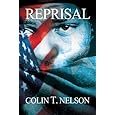
Product DetailsColin Nelson is a Twin Cities attorney and a board member at EAC. Comments on his first    novel, Reprisal, can be viewed on Goodreads


Friday, April 20, 2012

Hail! Amazon Reviewers

Hail! Amazon Reviewers

  Okay, some of you already know how I feel about Amazon's contributions to the expansion of the literary universe.  In case you don't, here goes: in just a few short years, Amazon successfully peddled full-on democracy and autonomy to both readers and writers.  By issuing books electronically, they gave authors the means to self-publish their stories at reasonable prices and make fair money at the same time.  In turn, readers received more choices in books and authors, and began buying differently. But wait, Amazon did something else, too. Amazon introduced us to Amazon book reviewers and we've been hooked ever since.  How deep does my affection for these stalwart souls run?
   Deep.
   Amazon reviewers read books all of the time for pleasure and devote even more time to writing public reviews.  They don't get paid but live off of passion and devotion. (I imagine that most of them get paid doing something else.)  And while professional reviews are still important for many reasons, including paving the road for achievement accolades and award ceremonies, readers like me, want to know what readers like you, think.
   Much has been written about the decay of the book critic and her/his reviews.  Some (critics) say you shouldn't review a book unless you're steeped in literary tradition and own demanding editing standards.  They don't believe that ardent reading and knowing what you like, love and hate, is sufficient background for making public endorsements.
   It doesn't matter, though.  Most people buy books because of recommendations from other readers.
   You might ask, what is wrong with paid pundit reviewers?  Normally, they give accurate  descriptions of plot and purpose, location and characters, and something too, about the higher or lower, meaning or significance of the story.  They sound smart and sassy and just a bit out of reach.  That's because many professional reviewers, not unlike some intellects in academia, naturally impart their own visions about a story without necessarily understanding how to fully engage the consumer of the review.
   You  can't distill the magic of story by bogging down a reader with rules about writing benchmarks.  Like ones that concern the balance between narrative and dialogue, or when and if characters' voices ring unique, and if they are consistent?  Really, unique and consistent, in one sentence? And don't get me started on the concept of plausibility.  If authors and readers worried about sticking to strict industry standards, we'd never have read To Kill A Mockingbird or Carrie, or viewed films like Citizen Kane or Apocalypse Now.
   Readers want to know if the reviewer was swept away and why.  They want to know if the story flowed, did the pages turn, and yeah, can you learn something by reading the book.  Amazon reviewers speak from their hearts and guts, oops - not very intellectual. But, by nature, these reviewers are information gatherers, and isn't that all what we really need?  A little peer-to-peer assessment can go a long way to purchasing the right book for you.

Another way Amazon brings a little more democracy to our literary body politic.


Wednesday, April 18, 2012

Justice Department vs Agency Model & Joe Konrath

Justice Department vs Agency Model and Joe Konrath

   Most of you have already heard that the Justice Department filed suit against five of the BIG 6 publishers and Apple, charging that they colluded to raise the price of e-books.  Many writers felt dismay over this decision and some raged.  Personally, at this point, my vote is with the Justice Department despite and in spite of the idea that the decision may raise Amazon to incommensurable hegemonic heights. 
   There really is much more to this than meets the eye.  The venerated big-six publishing monopolies have dominated the book world for decades.  Even as independent filmmakers and musicians began seizing power for themselves by creating, producing and becoming well-known, the writers of this world were told you better NOT! Amazon and Barnes and Noble changed everything. If this is a monopoly, it is one that, at least for now, serves our democracy.  Readers are exposed to many, many more authors than if self-publishing hadn't flourished, and they can buy more books because the books are now affordable.  Honestly, when you can purchase books for $2.99 on Kindle over hard covers that end up costing $26.00+tx...??!!  And the chances that the more expensive books will possess higher intellectual rigor - not likely - in my personal past experience.
   As to writers: no longer does the story teller HAVE to be a best-seller author to be read, but he or she can finally expose her work to the interested public and make a few bucks on the side.  I dig this changing world: for once, its offerings are skewed to the hard working writers' hood.
    
   Better yet, you should read more about this very important issue by someone who is an expert in the area, and to whom I owe a debt of gratitude : 
Joe Konrath/jakonrath.  The man is a knockout thriller writer who became very successful self-pubbing, and made his success knowable to unknown writers such as me, by posting well and often here: 


http://www.jakonrath.blogspot.com

/
"The Agency Model Sucks" entry is indeed eye-opening.